

Piping Plovers at Good Harbor Beach
The Piping Plovers are back!
I look forward to their arrival every spring, and it might be the same adult birds I see year after year. According to The Cornell Lab of Ornithology, many Piping Plovers return to the same sites to breed, and individuals that return with the same mate often nest within 128 feet of the previous nest site.
As part of their courtship, the male digs out several nests in the sand (called scrapes) and the female evaluates them. If he’s done a good job, she chooses one of the nests and decorates it with shells and debris to camouflage it.
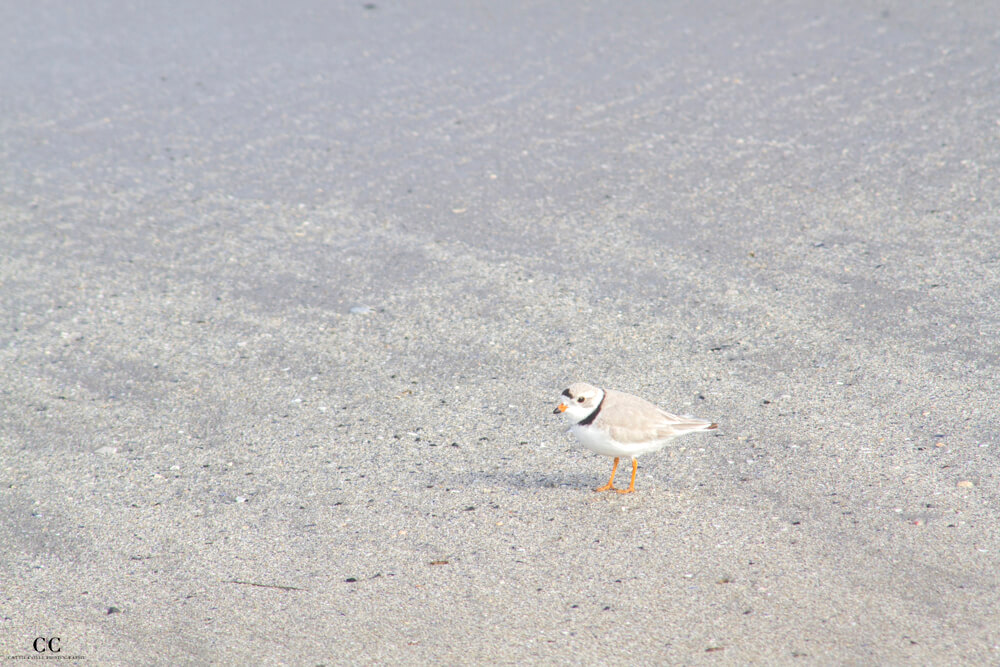
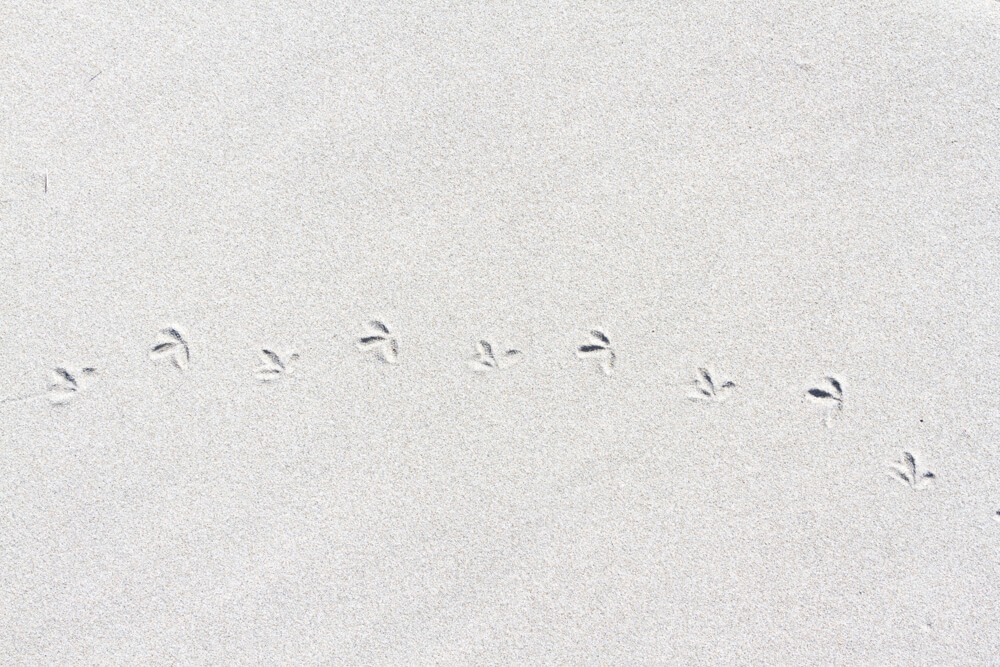
They are really well camouflaged themselves as well, and very difficult to spot when they’re standing still or crouching down in the sand. Sometimes, the only way I know they’re there is when I’m walking down the beach and see their tracks, or catch a tiny movement out of the corner of my eye, or hear their husky-voiced “peeplo” calls.

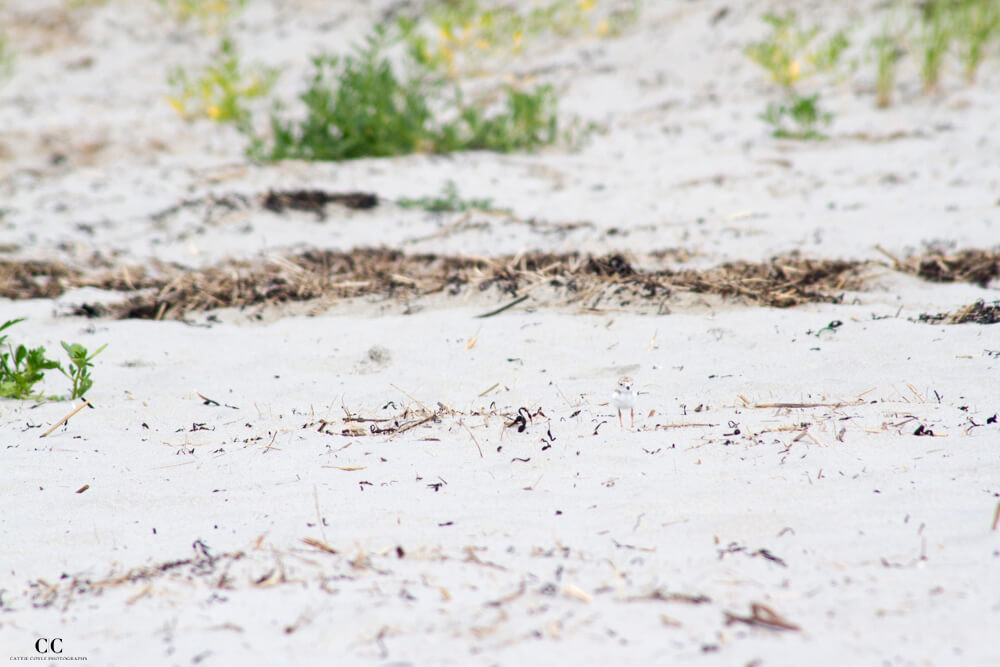
I love everything about these birds!

I even love their tracks. Like little works of art. 🙂
And of course, the ADORABLE chicks!
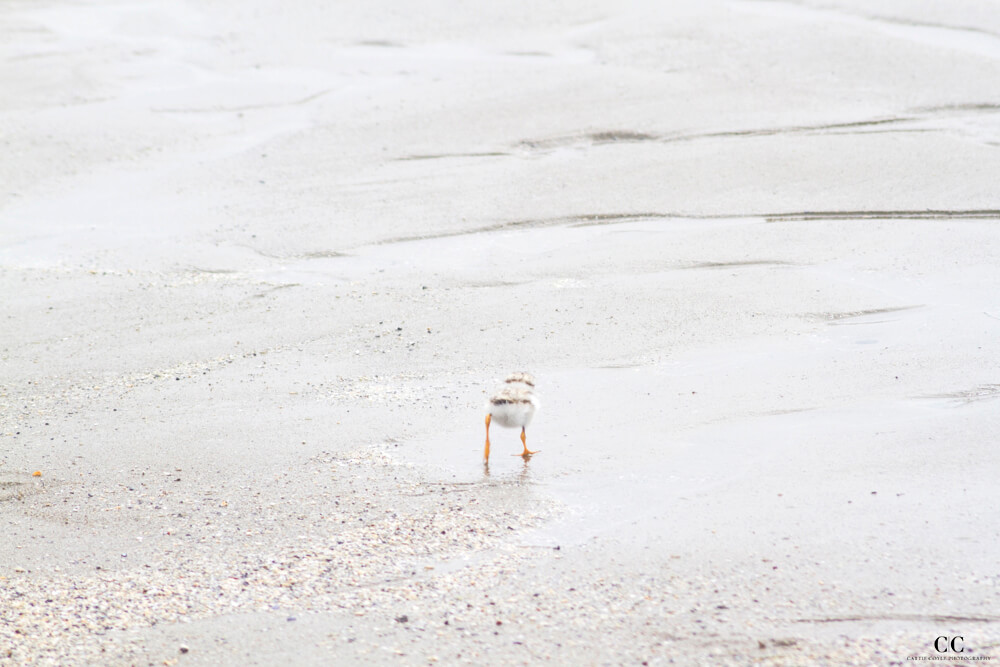
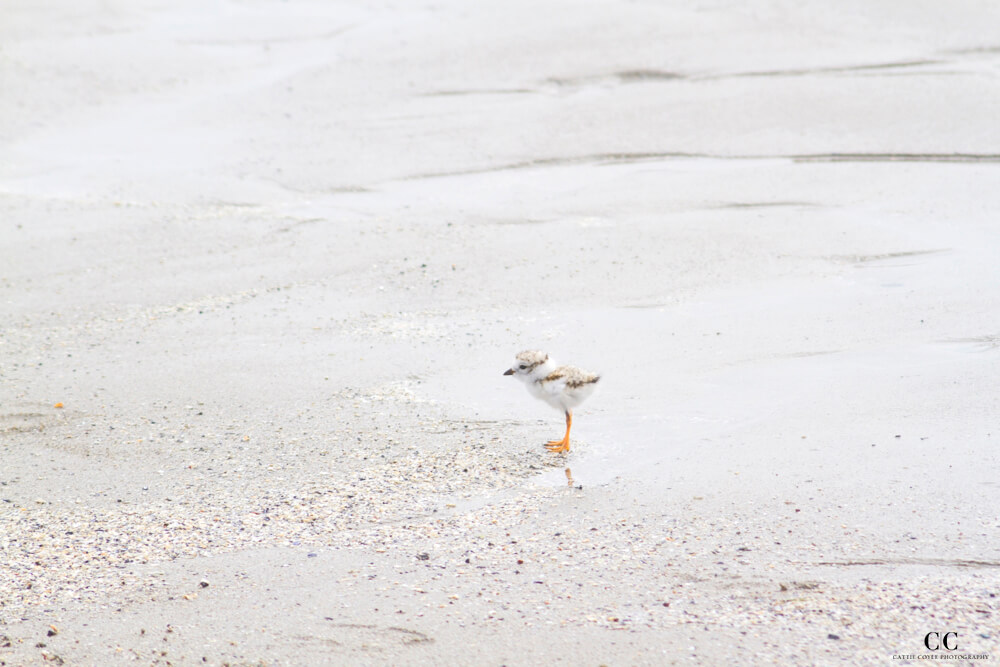

Mama Plover usually lays 4 eggs, and both parents take turn incubating them. They take about 28 days to hatch, and the chicks are able to walk, run, and feed by themselves within hours of hatching!
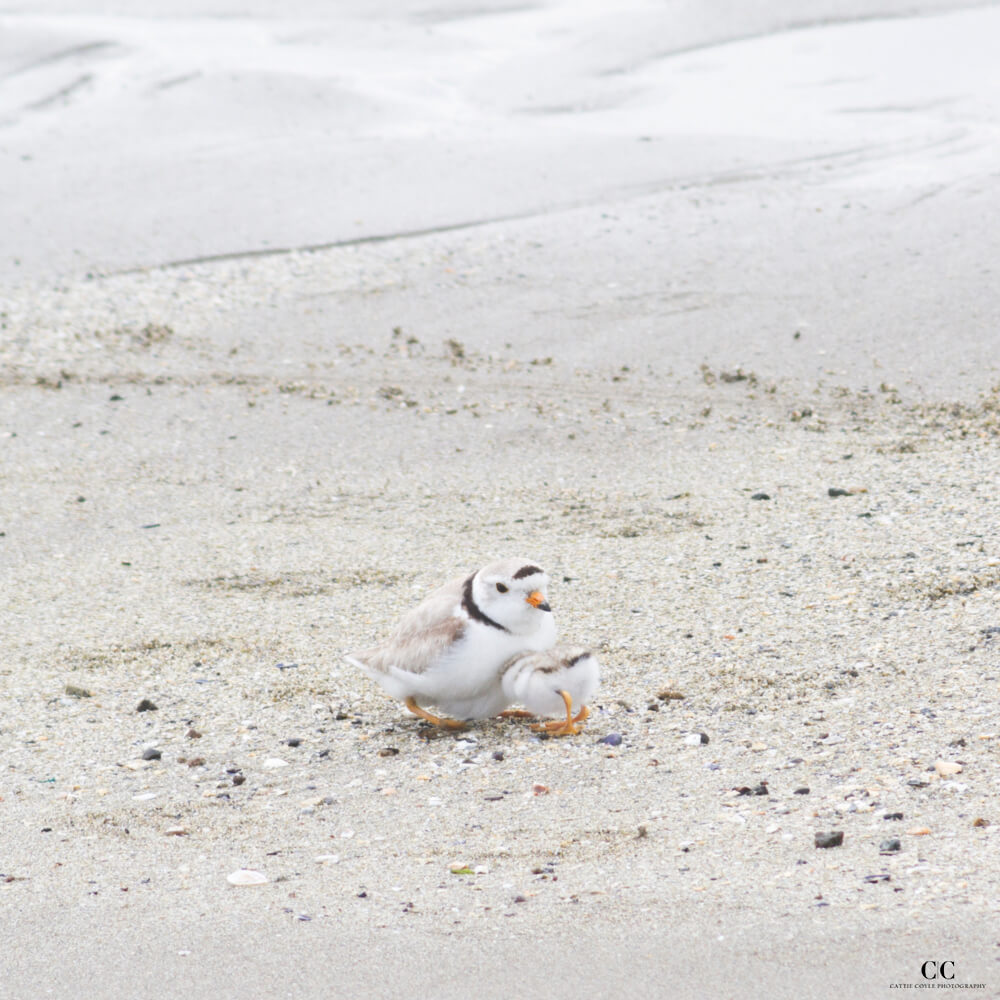
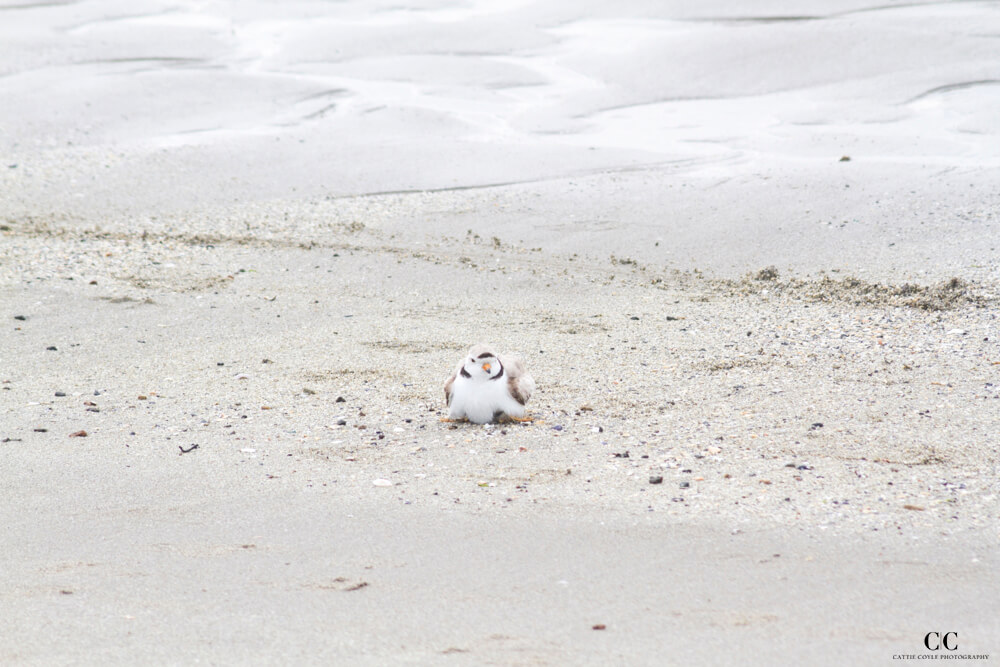
Newly hatched chicks can’t regulate their body temperature, and when they are running around looking for food on the beach, Mom and Dad will every now and then decide that it is time to warm up and make a little sound that have the chicks come running. They all huddle together under their parents’ wings for a little bit, and are then off to explore again.


endangered birds
Sadly, Piping Plovers are endangered due to habitat loss, disturbance, and predation. According to Partners in Flight, the current global breeding population consists of just 8,400 individuals.
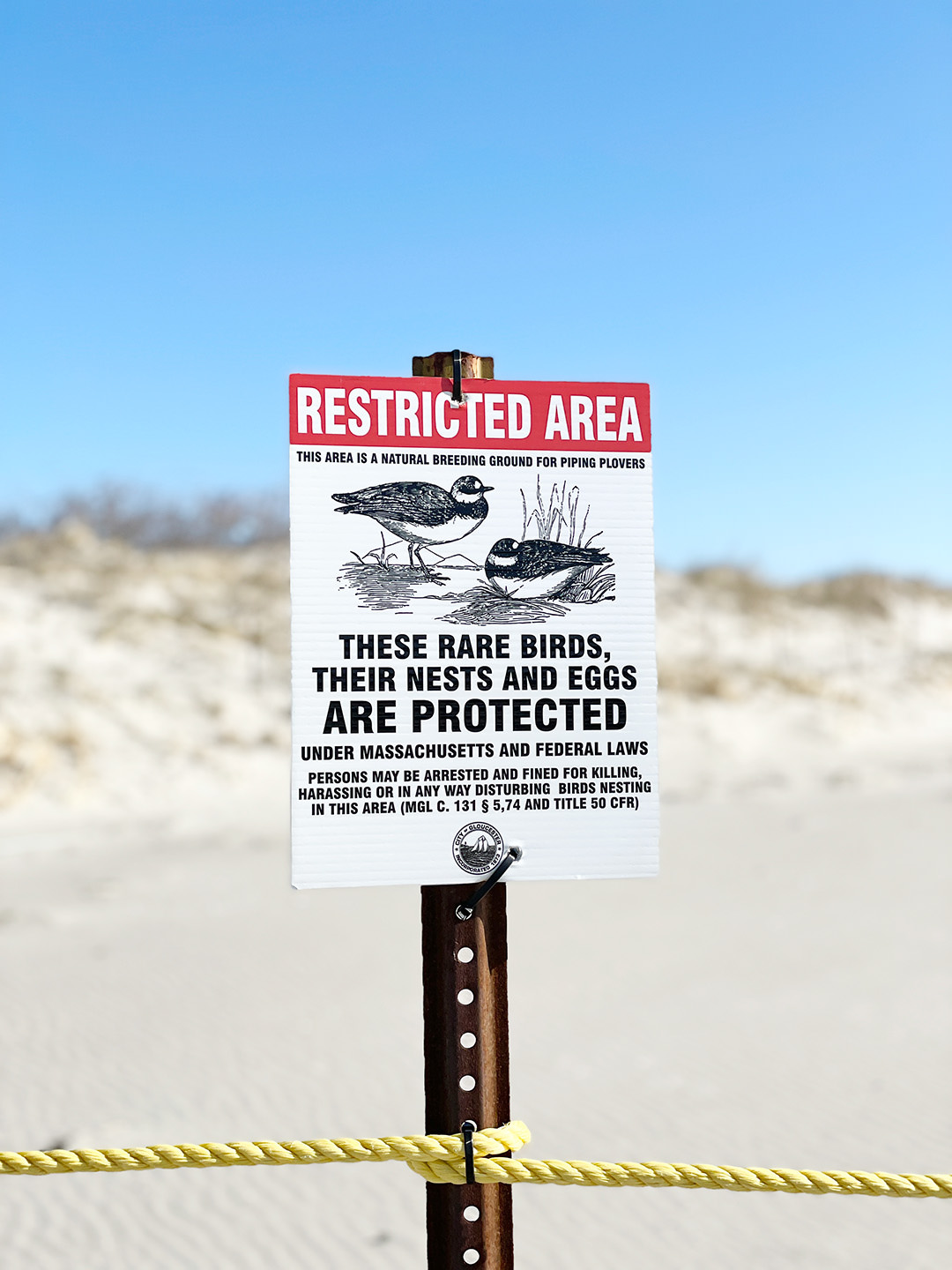
There are many conservation efforts to save these birds around the country, and here at Good Harbor, when the birds are spotted on the beach for the first time in spring, the DPW ropes off the parts of the beach where they usually nest. Animal Control officers and volunteers then keep an eye on things, and as soon as there is a nest with eggs, a wire cage is placed over it to protect it from predators.
Volunteers continue to monitor and watch out for the little guys in the summer. It’s terrifying to watch them scurry across the sand as beach goers run towards the ocean and throw footballs etc. without noticing that they’re there. Even with all that care and personal “bodyguards”, many of the chicks don’t make it to adulthood.
What We Can Do To Help
- Don’t let dogs run loose on the beach in late spring.
- Watch where you’re going (chicks have been killed by humans stepping on them).
- Don’t get too close to the nest (I shot all these images from a safe distance with a really long zoom lens).
- Don’t fly kites close to the nesting area.
- Fill in any holes in the sand. The chicks can fall into holes and become trapped.
- Make sure to take all trash with you. Any food left on the beach will attract predators who might also go for a Plover snack while they’re there.

More Facts About Piping Plovers
- In the late 1800s, unrestricted hunting for the millinery (hat) trade devastated the piping plover population on the Atlantic Coast. Not only were the feathers used to adorn women’s hats, but the birds were also used for human consumption. Following passage of the Migratory Bird Treaty Act in 1918, the piping plover population recovered to a 20th century peak in the 1940s, only to decline again as human development and recreational use greatly intensified in coastal habitats. The population decline led to federal Endangered Species Act protection in 1986.
- Unlike their nesting neighbors terns, that fly and dive at enemies, adult plovers walk and stop, walk and stop to avoid detection by visually blending into the background.
- They don’t nest in tightly packed colonies but sometimes they share territorial boundaries with another plover, whose nest can be as close as 45 feet away. Along these boundaries males face each other and perform a “parallel-run display,” a sort of cat and mouse game. One bird runs a short distance and stops. Then the other bird runs past the first and stops. They continue this chasing game until they run out of room, at which point they chase each other back to the start.
- If they spot a predator near the nest, they try to lead it away by feigning a broken wing, making themselves the target instead of the nest.
- A group of plovers are called a “brace”, “congregation”, “deceit”, “ponderance” or “wing”.
- More than one-third of the Piping Plovers that breed along the Atlantic coast spend the winter in the Bahamas (sounds like a perfect arrangement to me!)


Piping plover art prints

These images are part of the “Matted Minis” bird collection, a curated selection of small fine art prints available unframed, matted, or framed. These small prints are great on gallery walls, in small or hard-to-decorate wall spaces, or displayed on a shelf.
They’re perfect as gifts for bird lovers too – the unframed and matted prints come in an optional gift box tied with a ribbon. Plus, you can have them sent directly to the recipient if you would like.
A portion of all sales in this collection is donated to the American Bird Conservancy.


